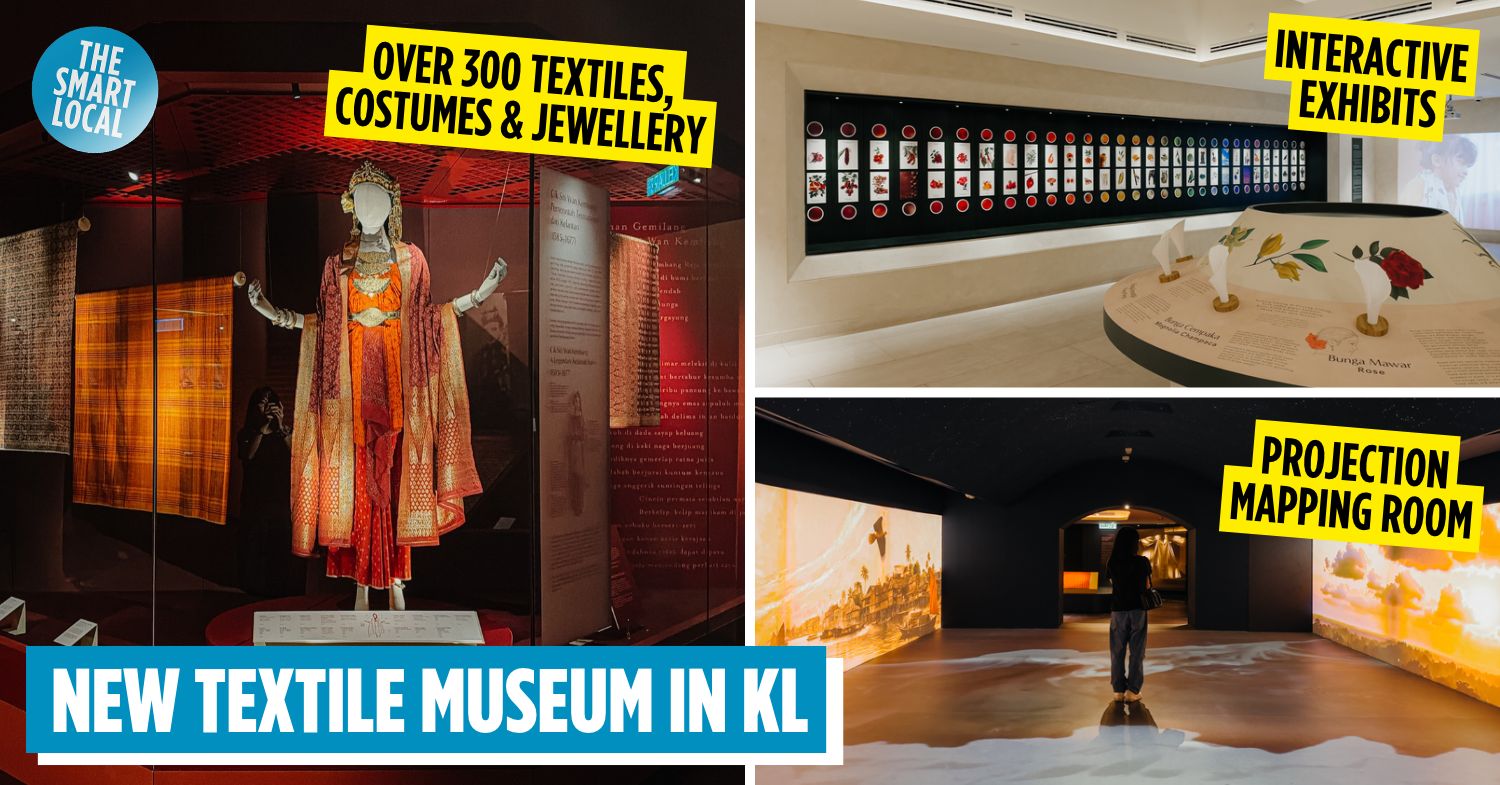

Merdeka Textile Museum
Textiles are everywhere, yet most of us hardly stop to think about how they’re made or the role they play in culture. But this new museum in Kuala Lumpur is about to change all of that.
Located next to the sky-piercing Merdeka Maybank Tower, the recently opened Merdeka Textile Museum spotlights local textiles, the fabrics that helped shape Malay culture and the stories woven into them.
We checked out the museum so you know what to expect on a visit.
Table of Contents
What is the Merdeka Textile Museum?
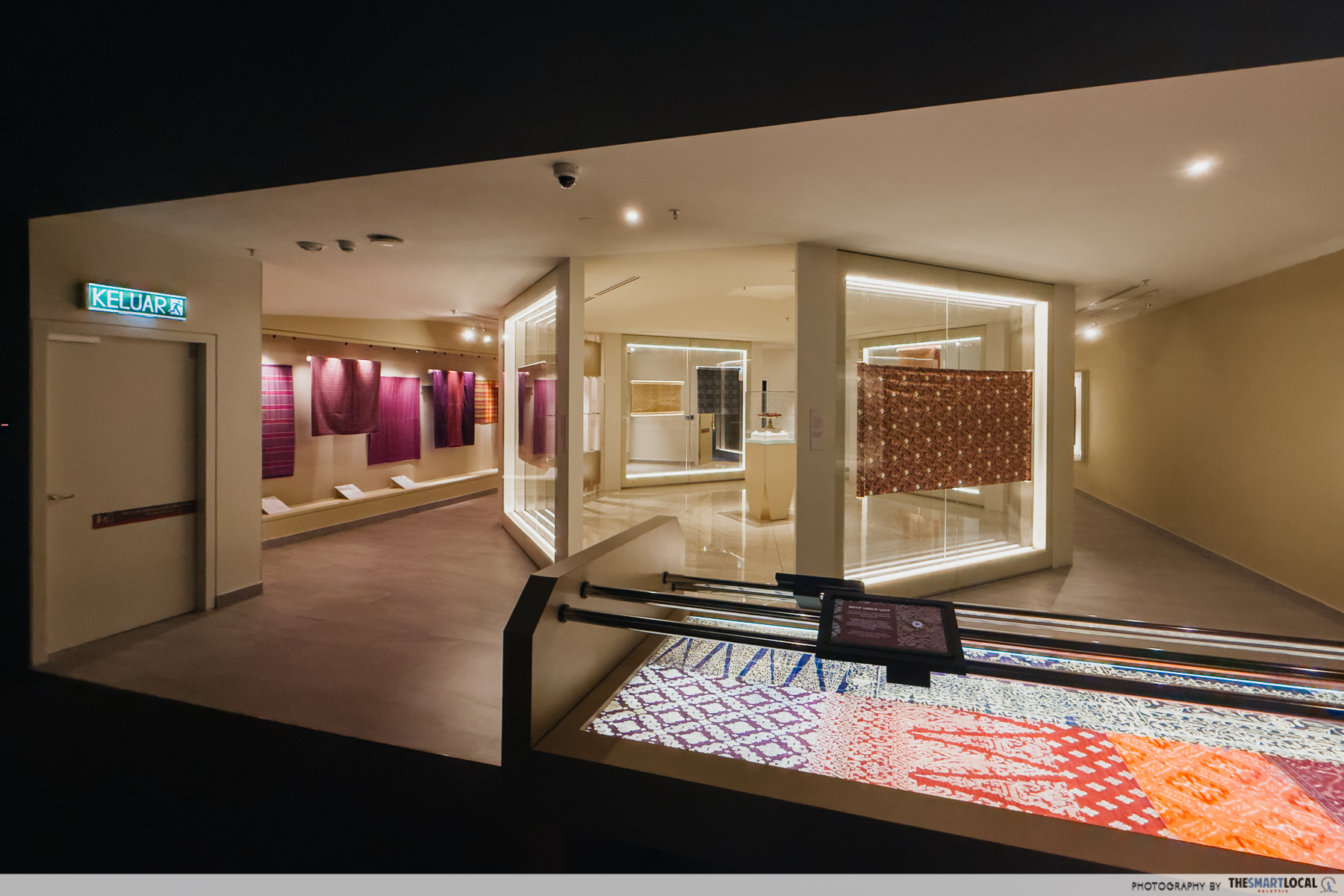
Not to be confused with the National Textiles Museum, also in KL, the Merdeka Textile Museum is the product of 6 years of work to transform the Malay World textile collection of Malaysian cultural figure Azah Aziz into a multisensory museum.
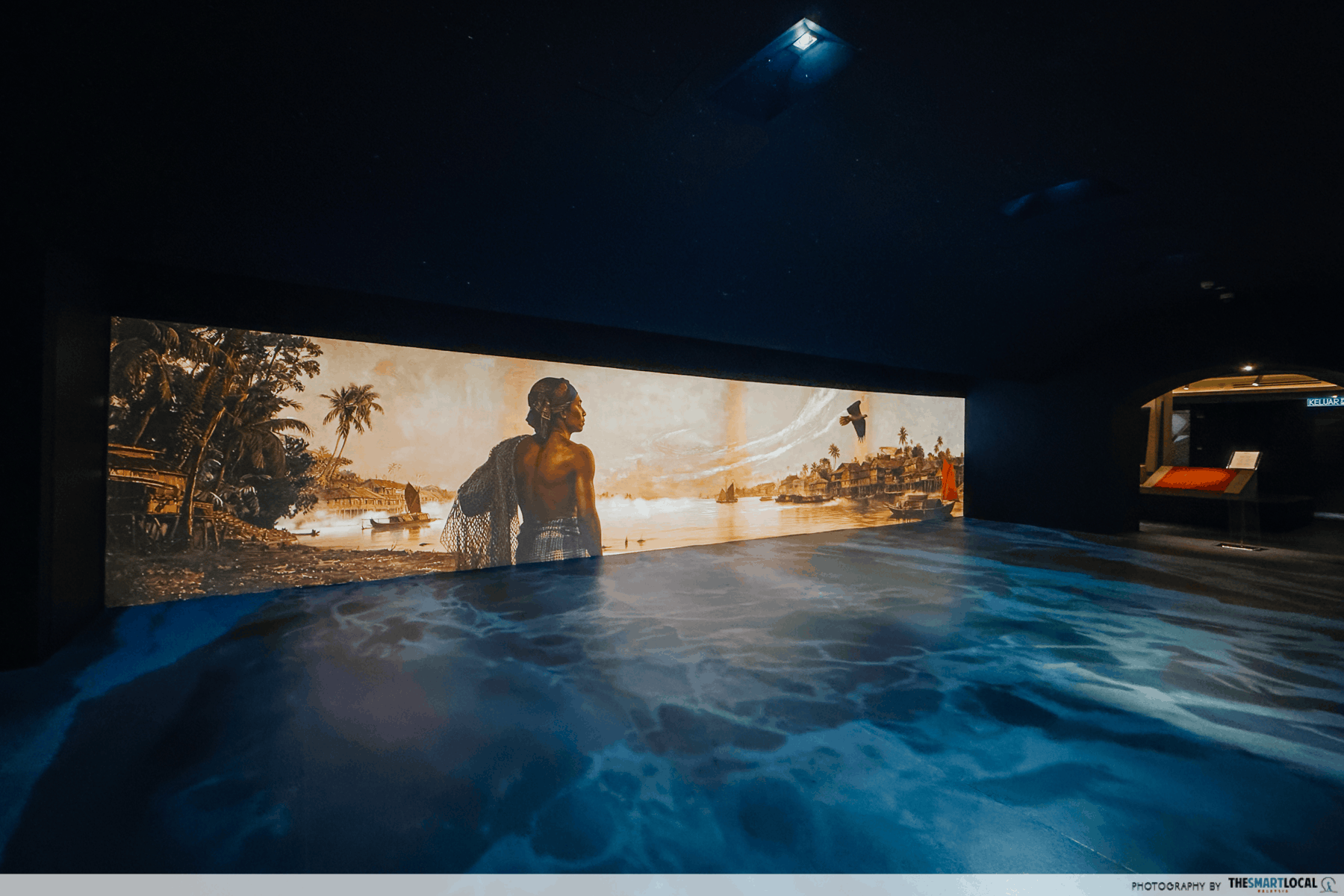
Rather than being the sort of museum with just paintings and plaques on four walls, it displays 300 artefacts and replicas, including but not limited to textiles, costumes, and traditional jewellery. Interactive museum features such as a projection mapping room and floral sniff stations further welcome visitors to get closer to the works on show.
What to expect at Merdeka Textile Museum?
The museum is divided into 7 galleries, focused on everything from the natural materials used to create Malay World textiles to modern-day interpretations of historical textiles and garments.
Here’s a quick look at each space:
Material culture and nature
Start your journey at the museum by learning about how the Malay World draws inspiration from nature for its handicrafts.
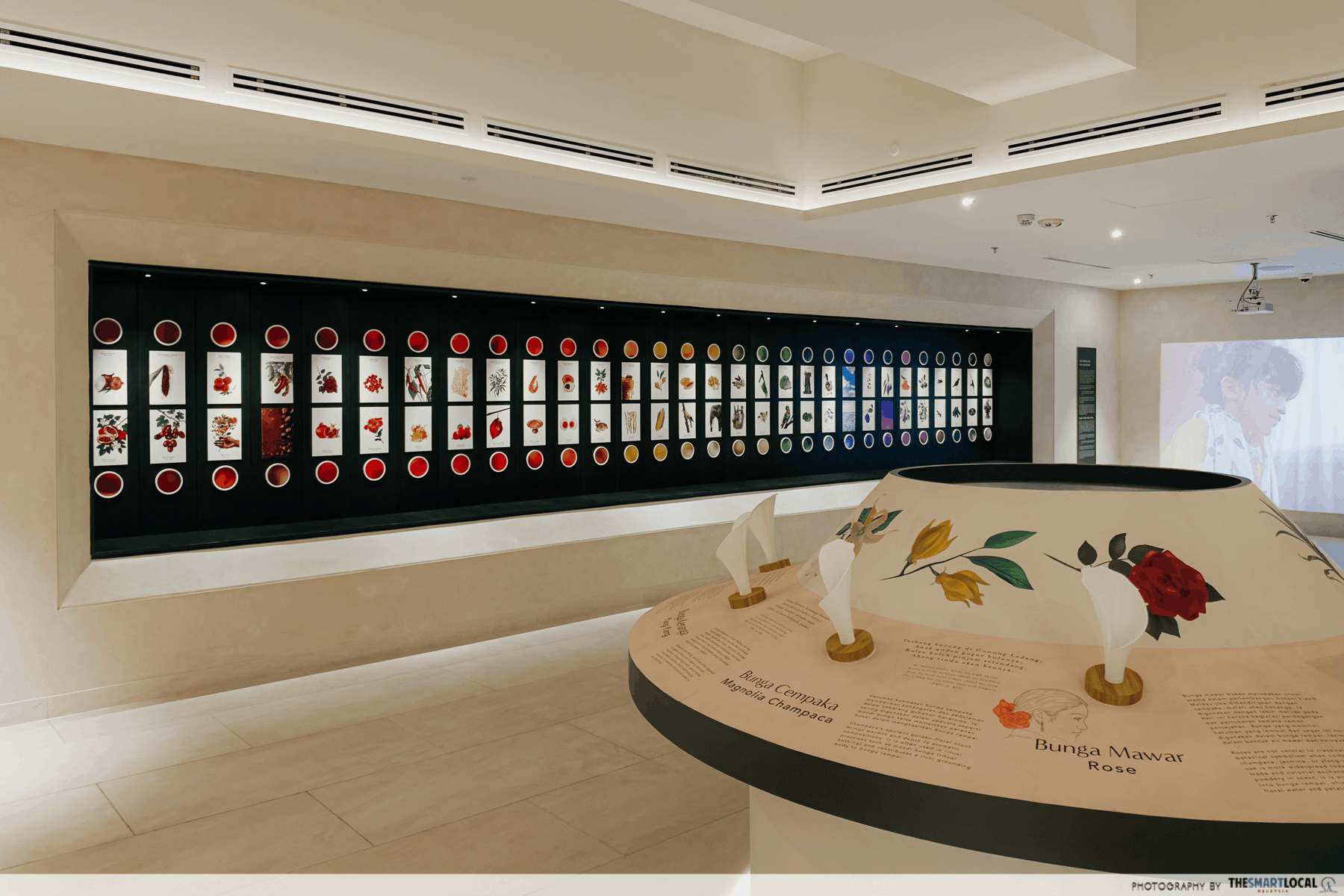
A Pantone-style wall of colours shows how Malays describe textile colours derived from nature, while a sniff station allows guests to sample scents of flowers like ylang-ylang and magnolia champaca.
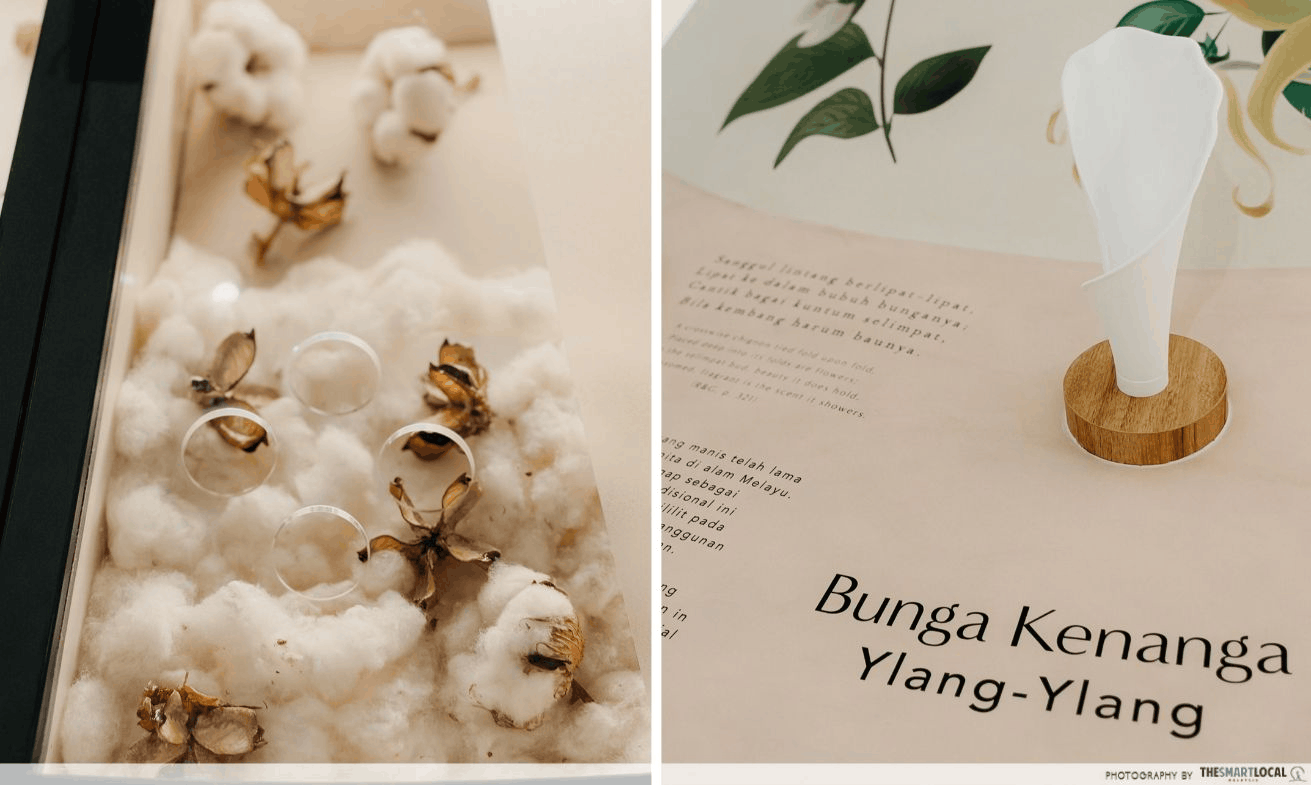
You can also learn about various plants’ roles in rituals and pigment production, particularly for the red and brown dyes favoured by the Malay people.
Influences from other cultures
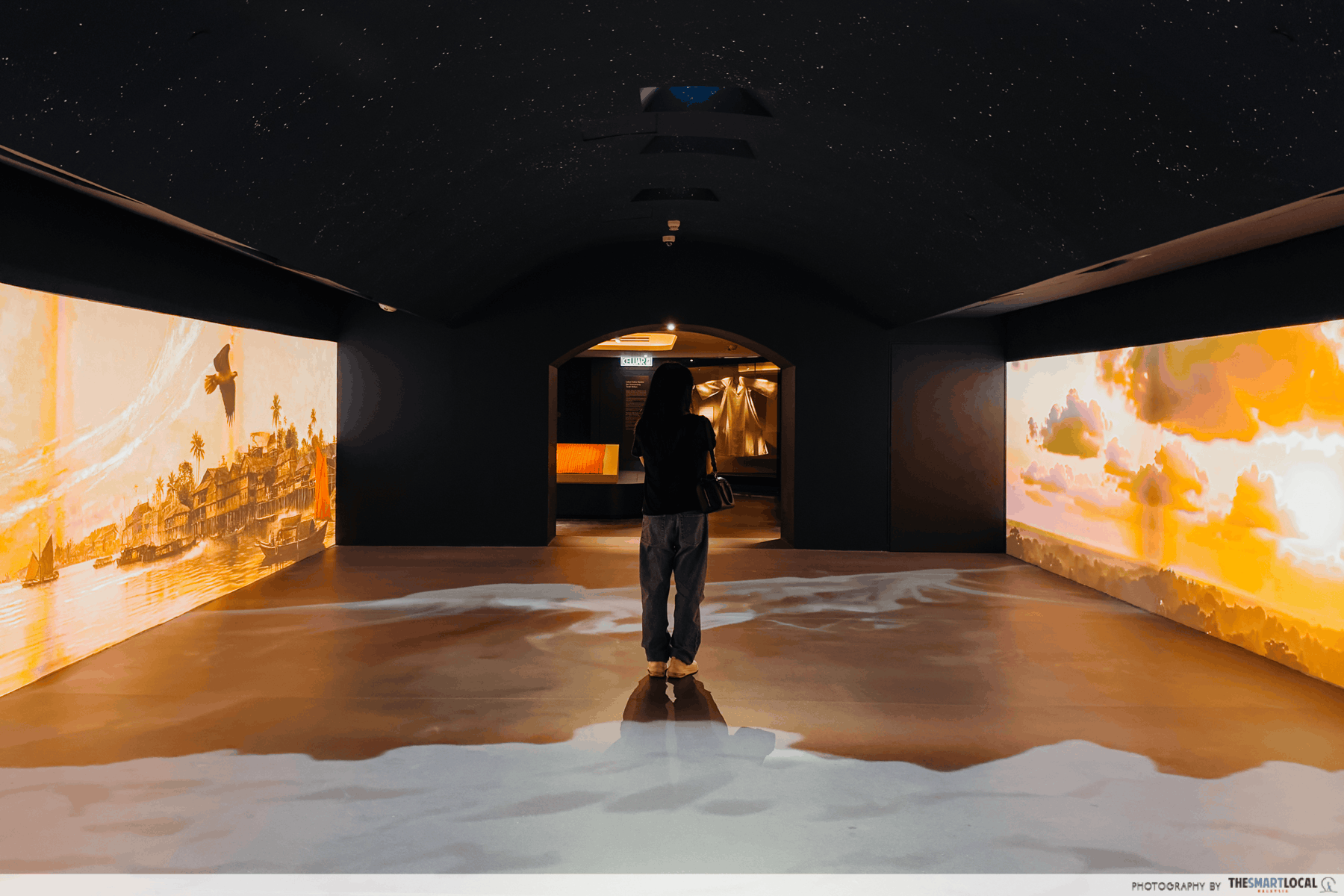
A projection mapping room serves as an introduction to the next gallery, which highlights various influences on the Malay Peninsula, which had an important role geographically in the East-West trade along the Maritime Silk Roads.
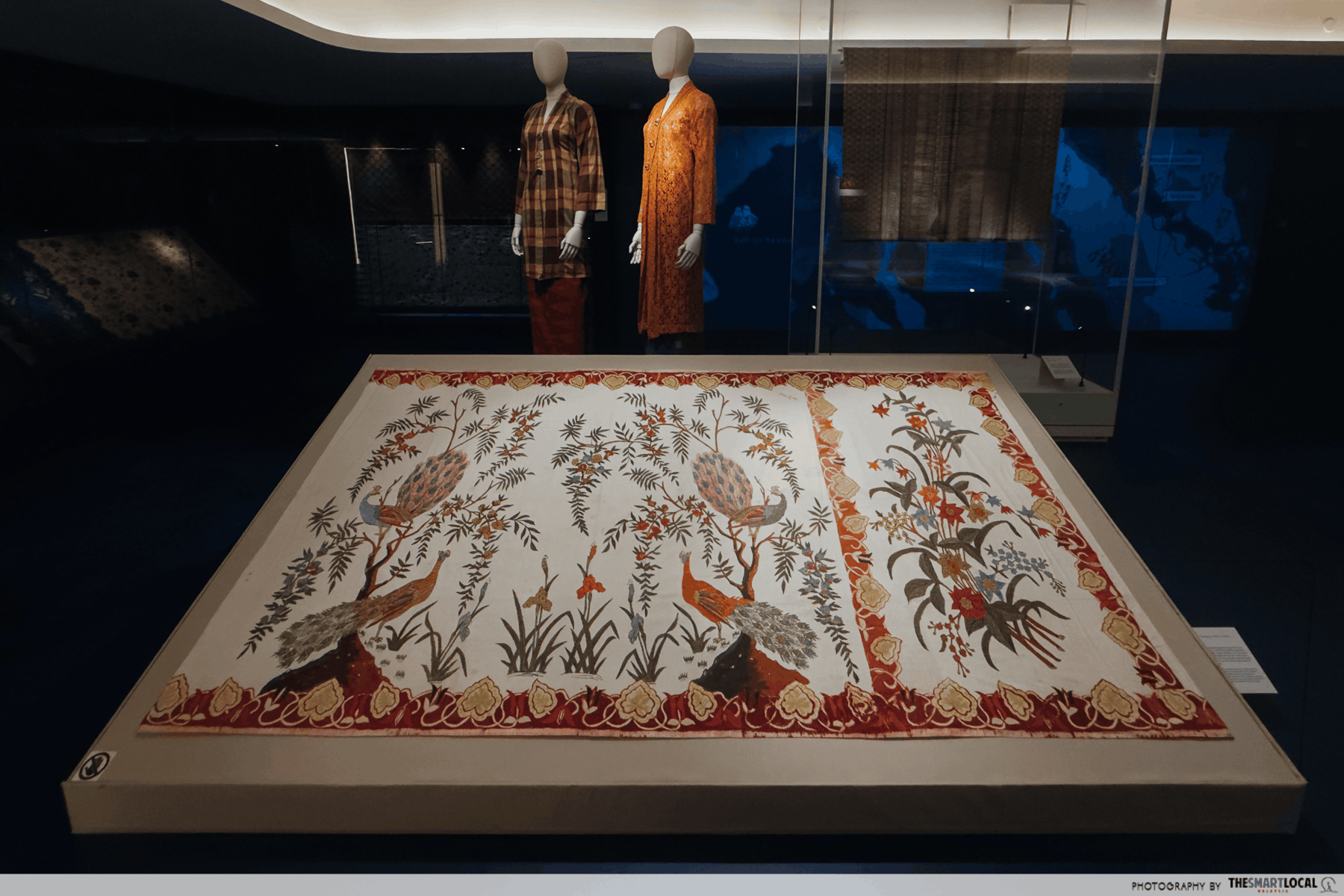
Various textiles like sarongs, Kebaya, batik, geriamut, and a Tekat gem pillow ends further showcase these international influences on Malay textiles.
The motifs, patterns & symbols of Malay textiles
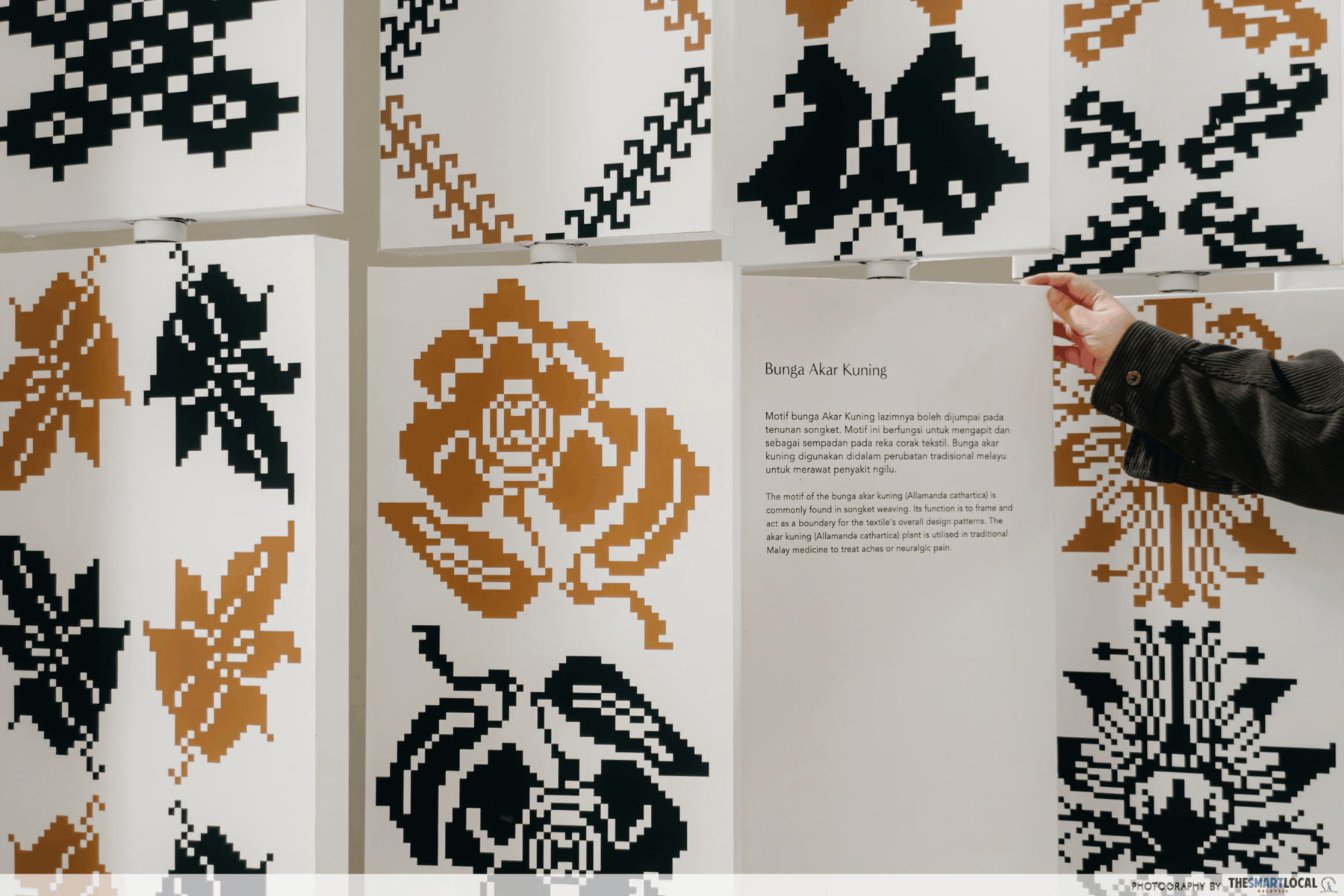
This gallery’s interactive exhibits explore the motifs, patterns, and symbols that decorate Malay textiles.
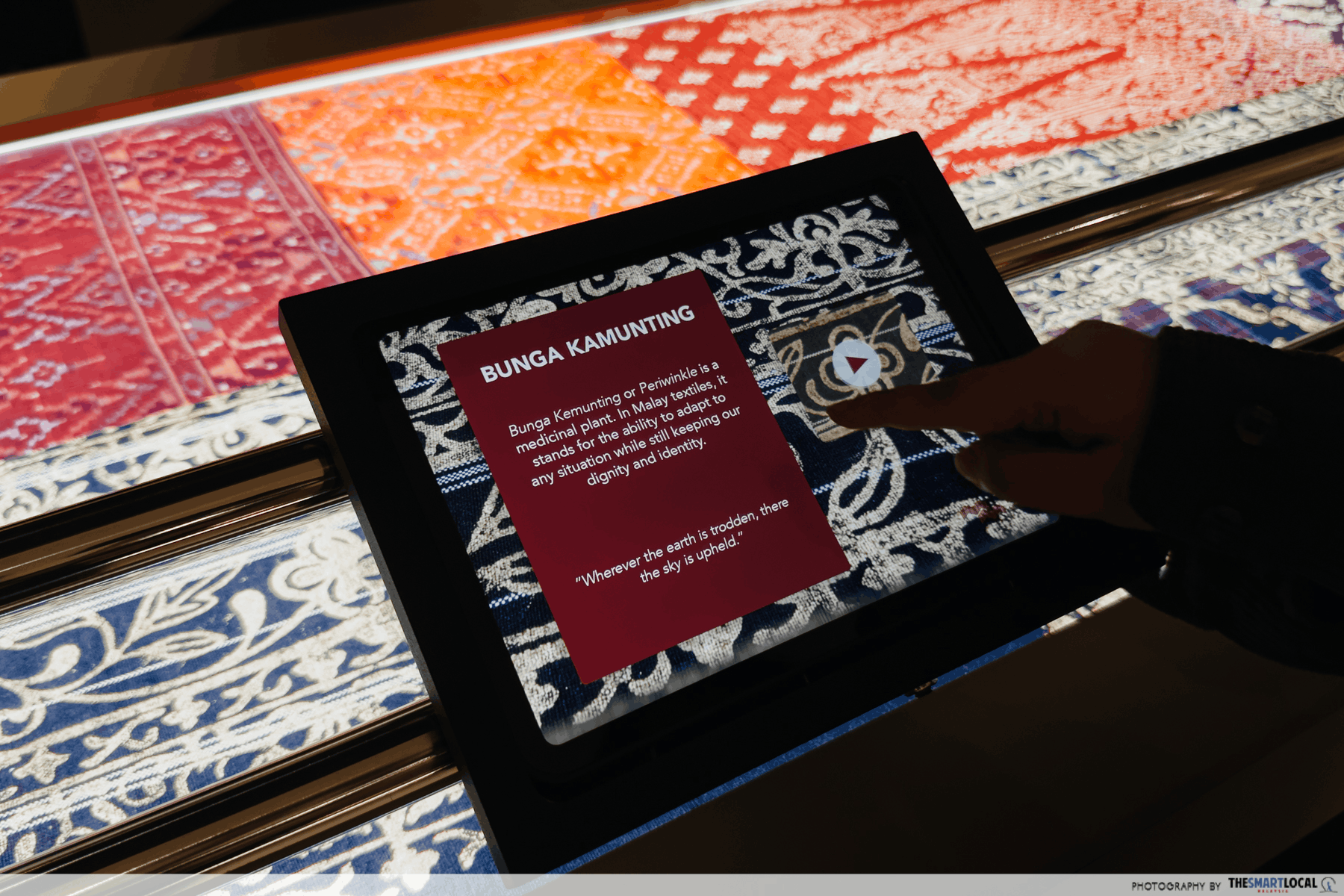
Flip around rotating panels on a wall to learn more about popular flower motifs and geometric prints found on Malay textiles, and move around a digital magnifying glass over a projection table to explore two textiles and their patterns up close.
The art of Malaysian batik
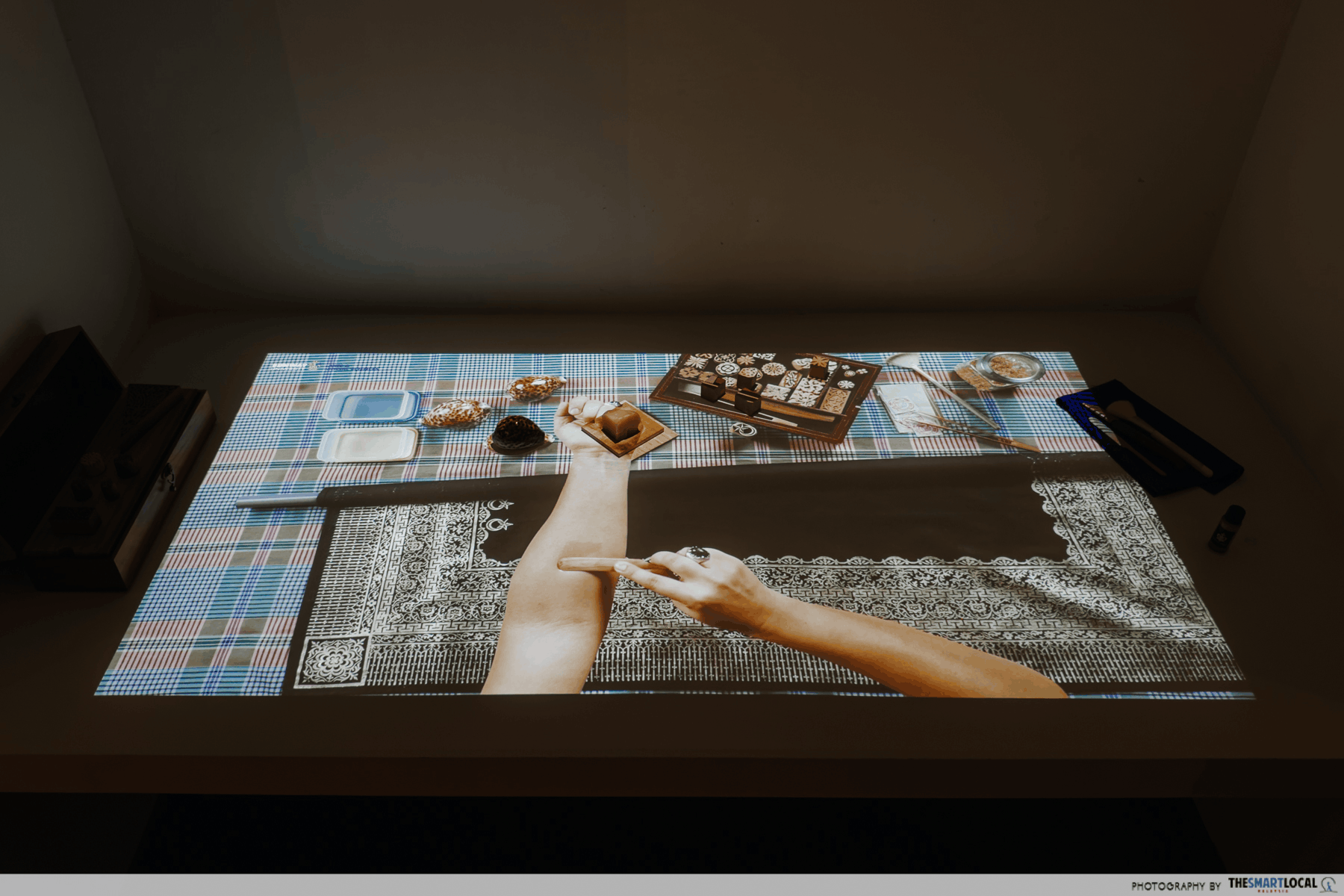
You might already know of Malaysian batik. But if you are not familiar with the tools and techniques involved in making this famous textile, this gallery is the place to learn more.
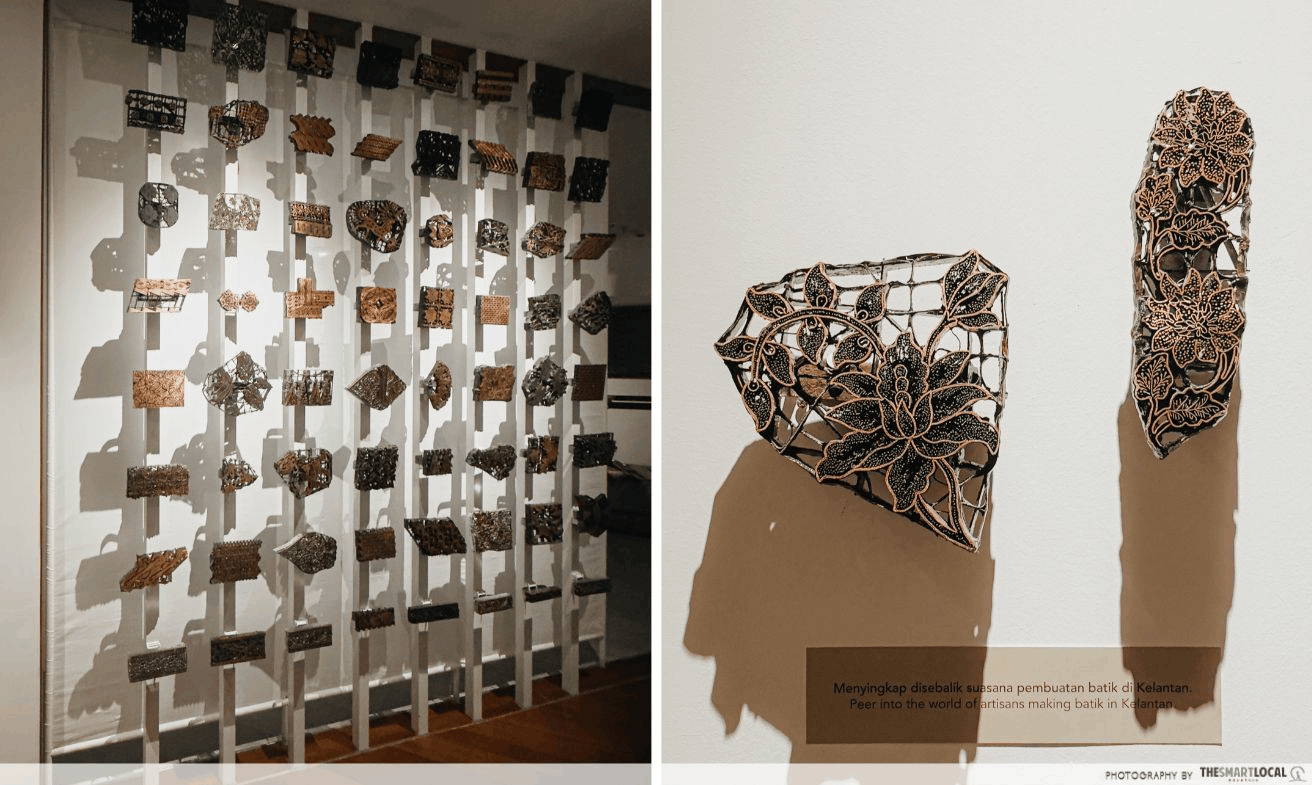
Here you’ll find a corner dedicated entirely to artisanal copper stamps featuring various batik patterns, a full-scale traditional textile loom, and video projections on tables showing how local master artisans create intricate patterns on textiles.
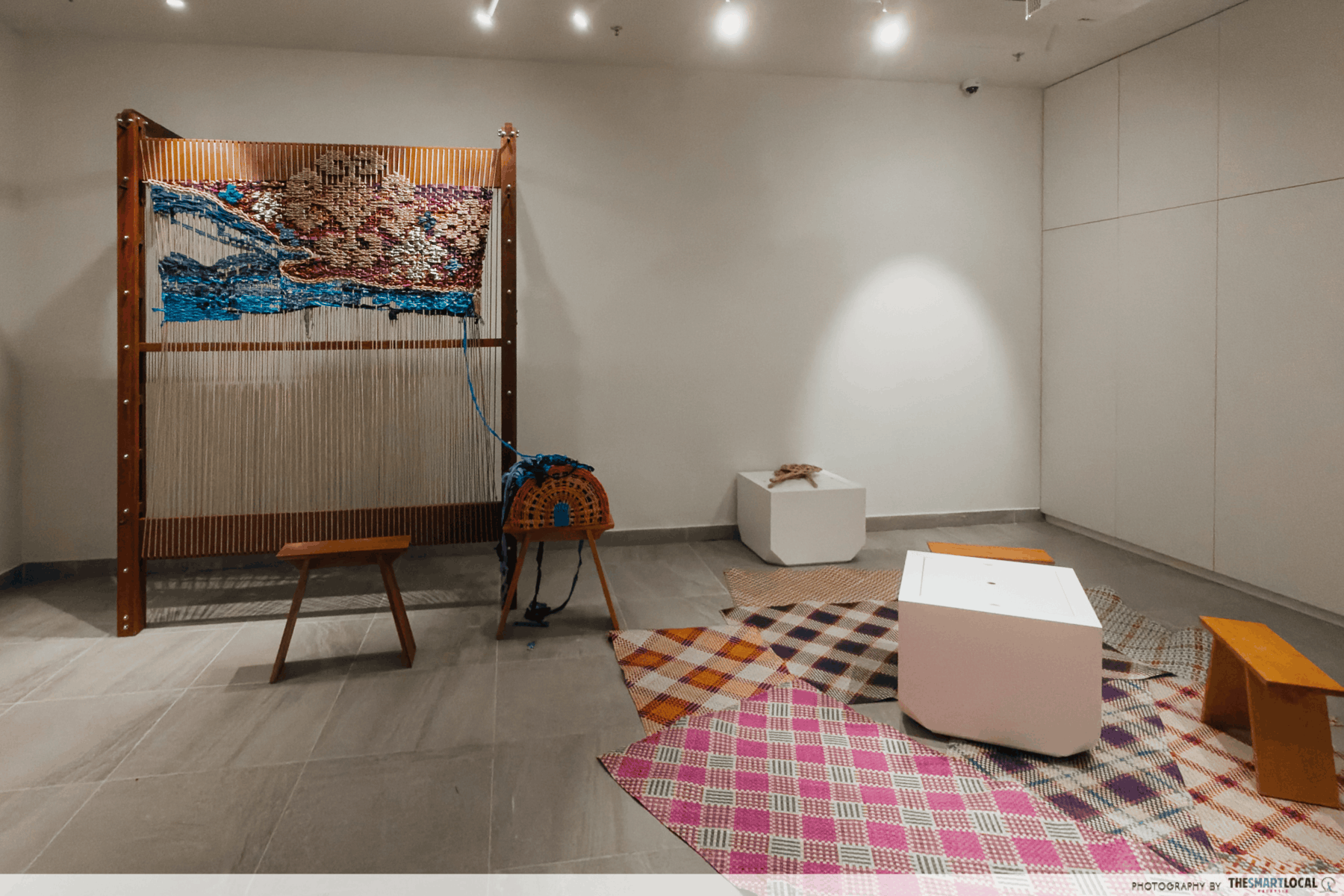
There’s also a separate room accessible here with an interactive giant loom and seating, where you can rest for a moment or try your hand at weaving giant threads to make a traditional pattern.
Another VR room lets you explore the studio of weavers by operating a trackball.
The costumes of the Royals
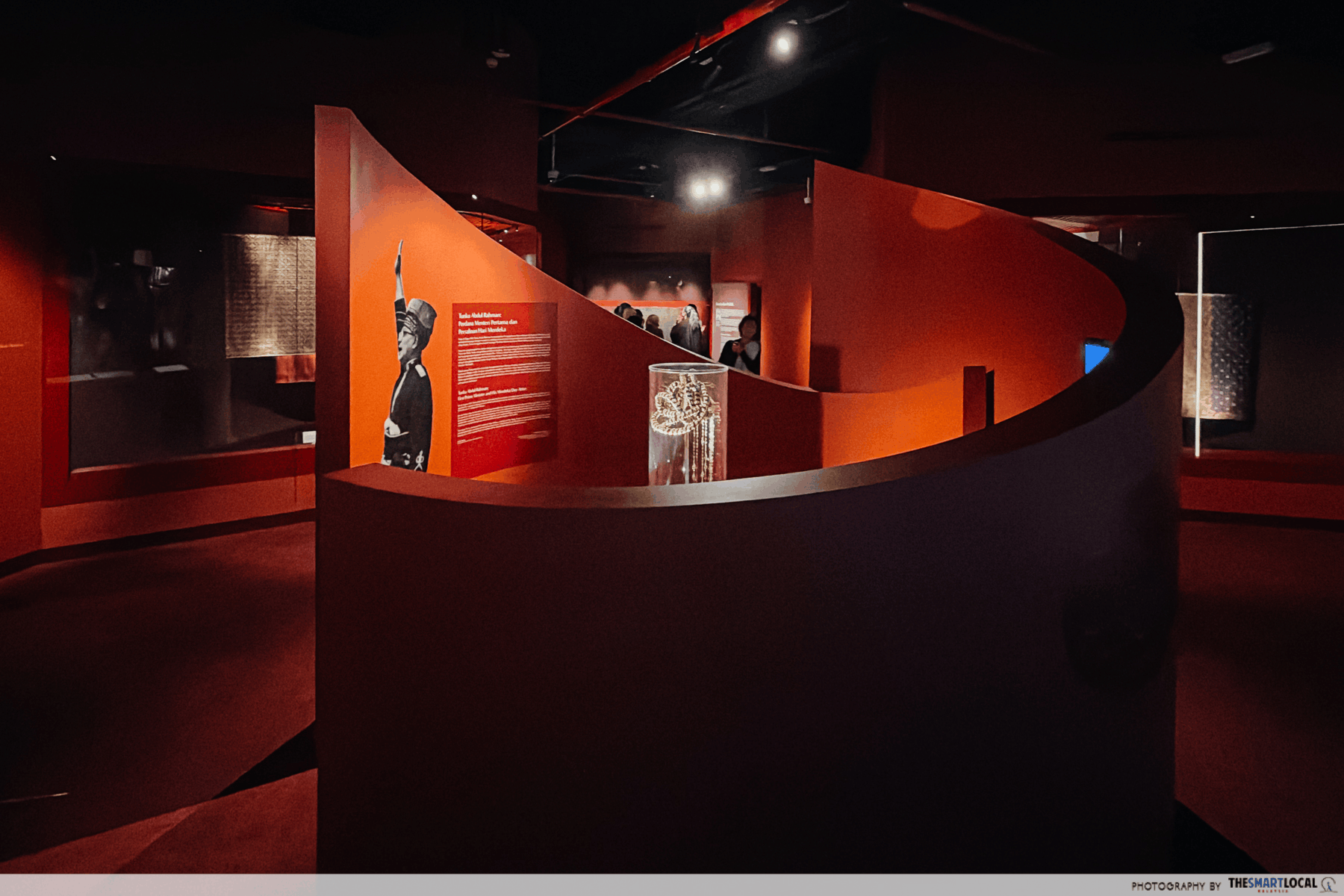
Textiles were considered a status symbol in the past, and there were many customs to adhere to in creating and wearing them. Headpieces and jewellery played equally important roles in image making, and this gallery shows how all three of these elements work hand-in-hand.
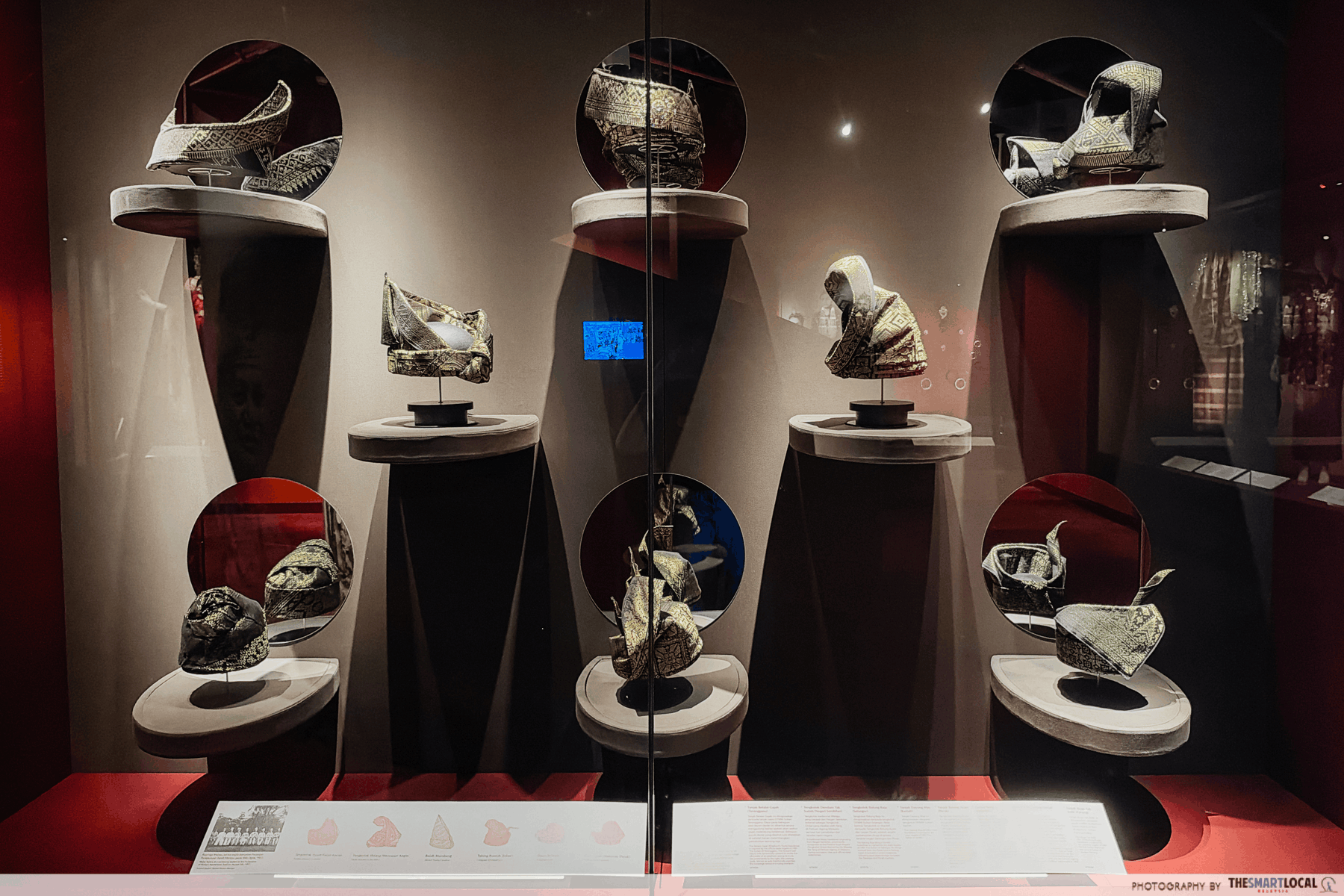
A larger-than-life tengkolok centrepiece highlights the head garments of Malaysia’s royal and political icons, including Tunku Abdul Rahman and Malaysia’s first king, Tuanku Abdul Rahman ibni Almarhum Tuanku Muhammad.
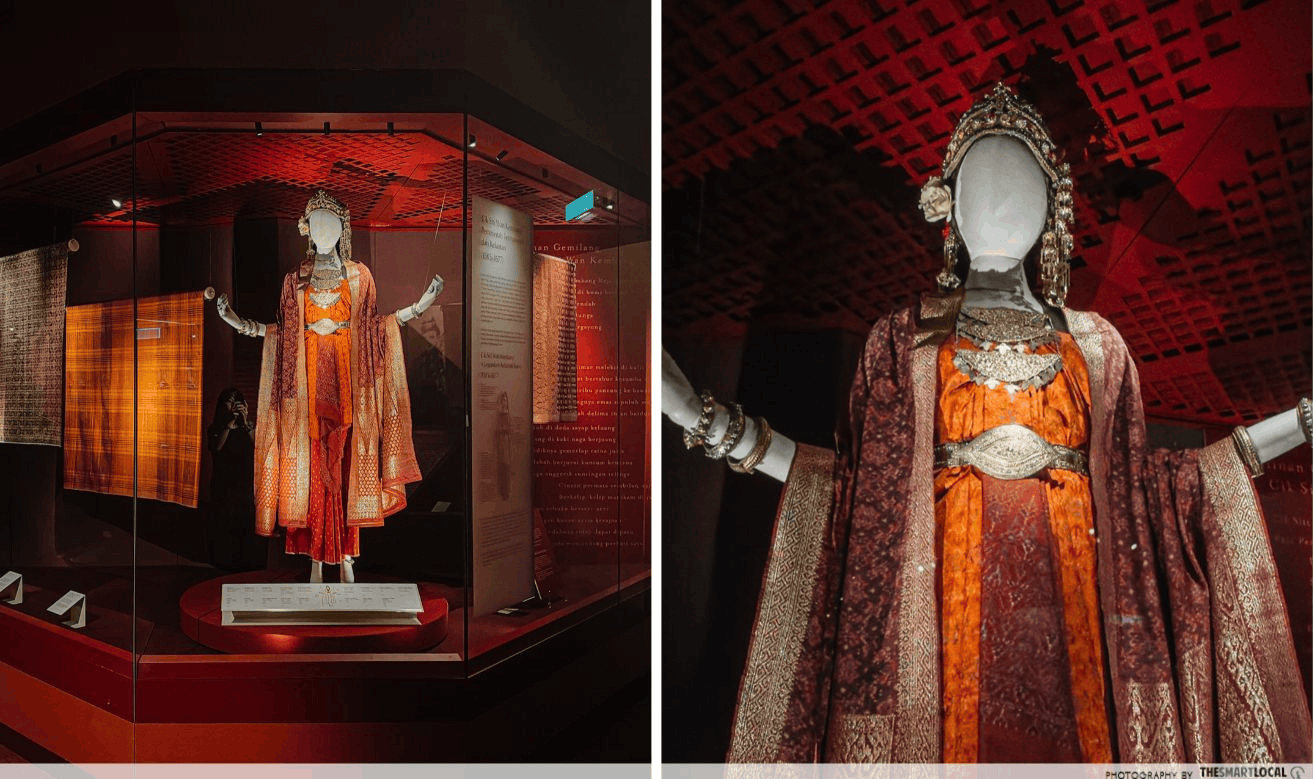
Not to be missed is a dazzling garment display of Cik Siti Wan Kembang, a legendary female ruler of Kelantan from the 17th century. The mannequin is decked head-to-toe in royal regalia of the era, with a chart explaining each piece worn in detail.
The role of textiles in rituals
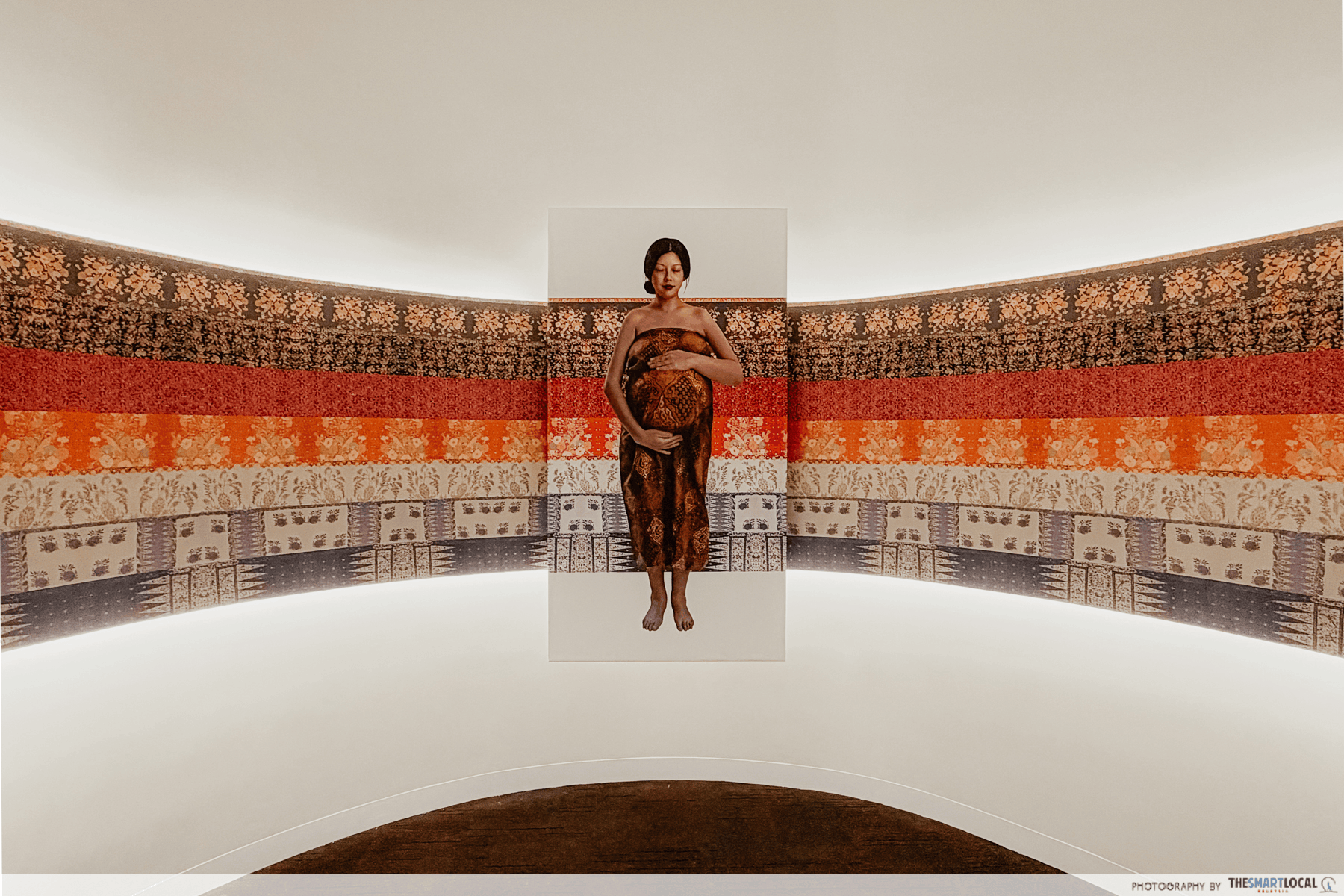
This gallery is divided into mini rooms of sorts, each one exploring how textiles are involved in different Malay and Islamic rituals.
One exhibit features the lenggang perut, a traditional midwifery practice that involves removing seven layers of fabric, typically batik, from an expectant mother through the act of gentle rocking. The fabrics symbolically represent a barrier against harmful forces.
Modern-day textiles
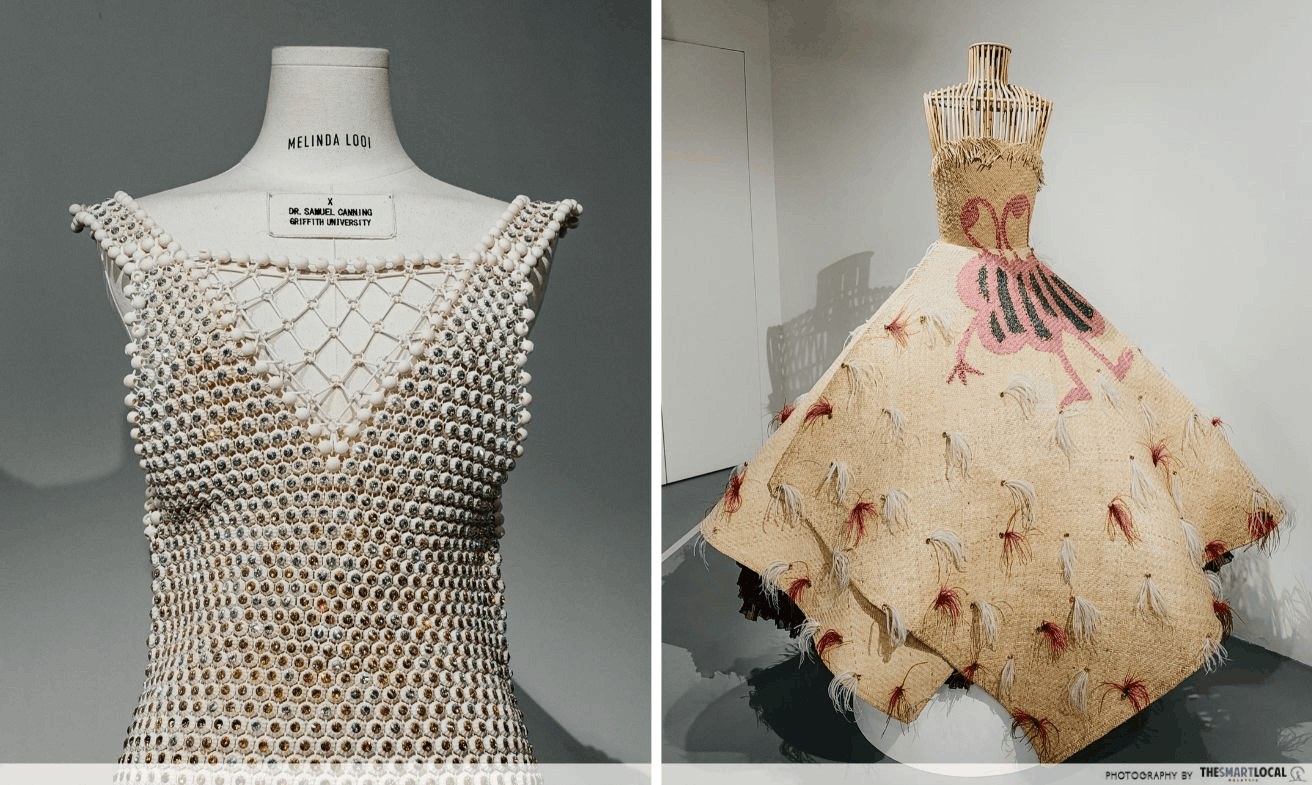
Gallery-goers are then guided back to the present, in the final room featuring fashion ensembles and couture pieces by contemporary Malaysian designers and fashion houses from Melinda Looi to Behati.
See how textiles evolved from their early days in Malay culture, with pieces including a dazzling glittery gown that has been 3D printed and others using less traditional colours like white and textiles like rattan.
What else is there to do at the museum?
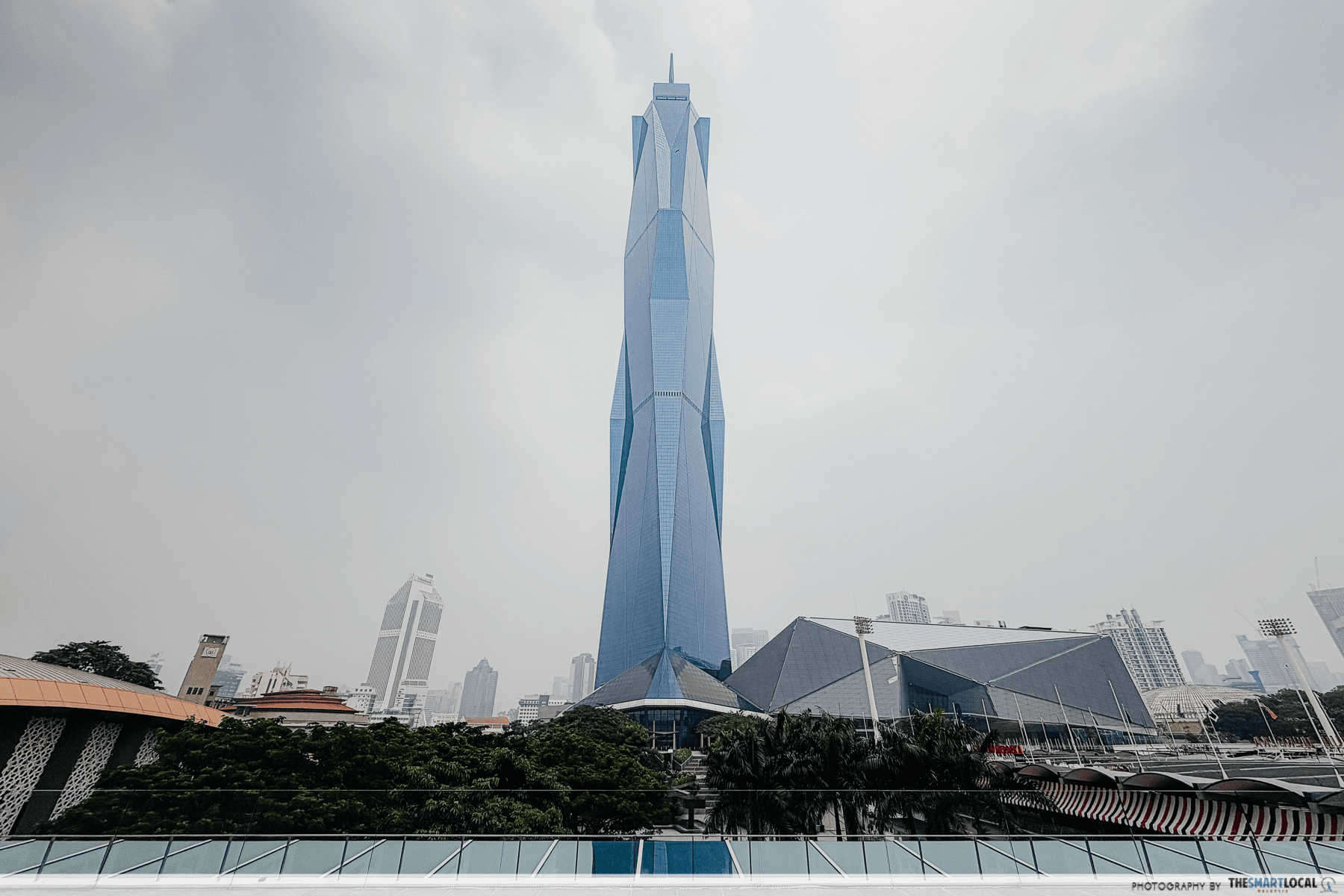
Once your museum adventure is over, there are three more places for you to stop at. The first is a viewing deck, The Look at 118, which has a marvellous unblocked view of the Merdeka Maybank Tower.
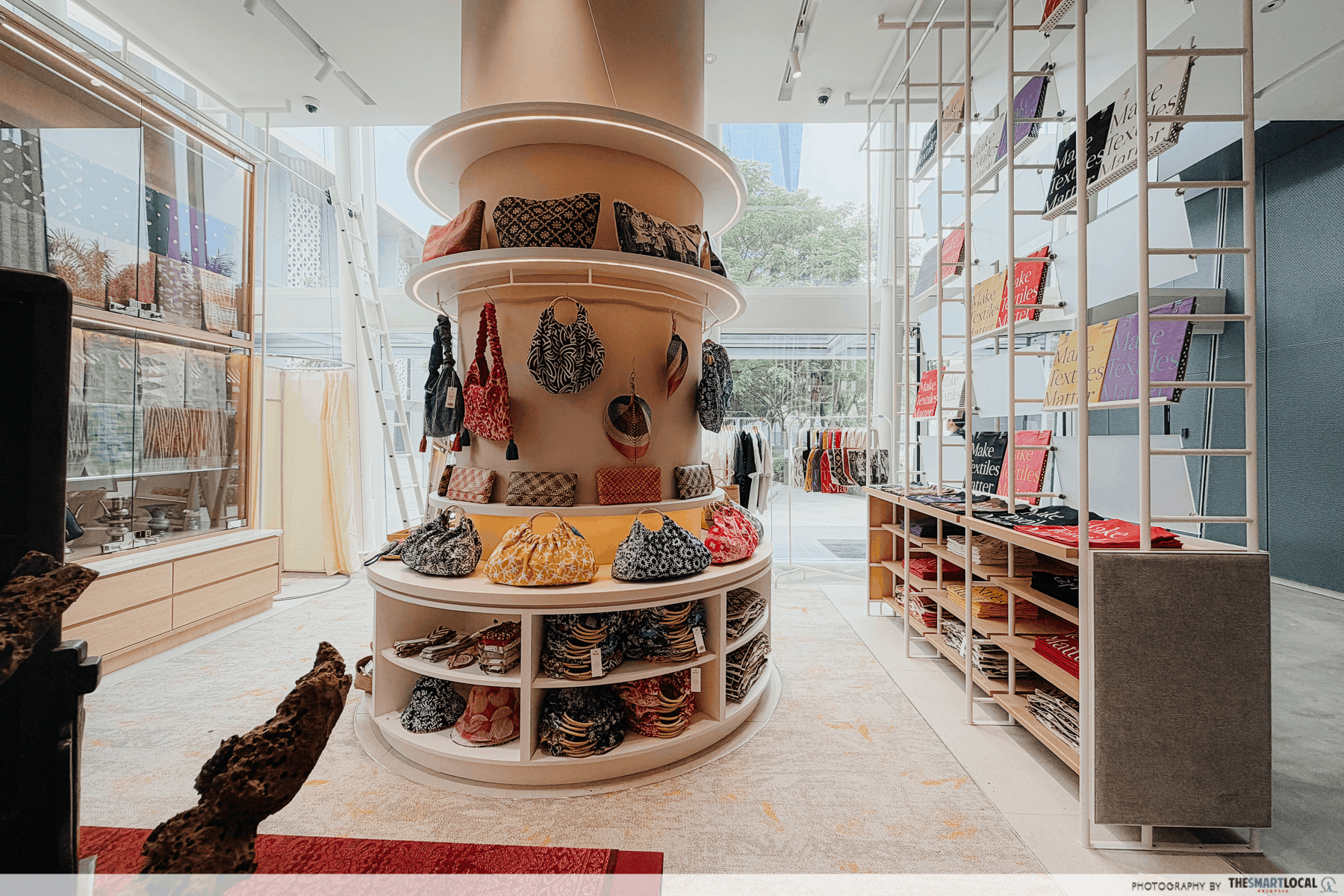
And of course, no museum visit is complete without a trip to the gift shop. The one at Merdeka Textile Museum unsurprisingly spotlights traditional textiles alongside its in-house merch, with fashion accessories, home goods, and more to browse and buy.
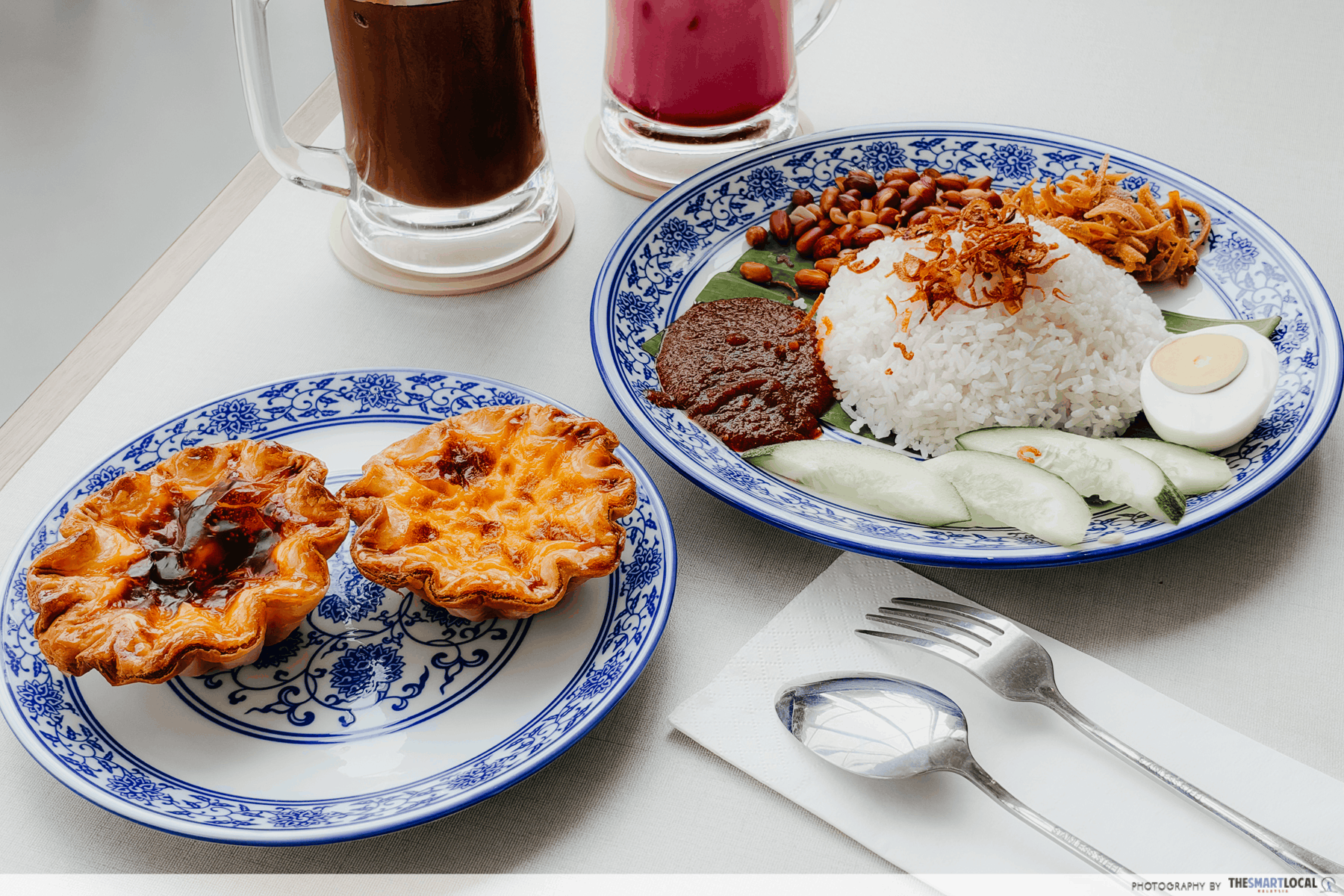
In case you’re hungry, there’s the Makamakan cafe by Serai Group just to the left of the entrance to the galleries. The cafe serves a variety of Malaysian dishes, delicacies, and drinks at a surprisingly reasonable price point.
Expect a crowd if you come around noon, though, as it is a popular lunch spot for employees from the neighbouring Merdeka Maybank Tower.
Are there entrance fees?
Entrance to the museum is RM20 for Malaysian citizens, and RM50 for non-citizens. Admission is free for Malaysian senior citizens, students, persons with disabilities, and children under the age of 12.
Tickets can be purchased online or at the door.
How to get to Merdeka Textile Museum?
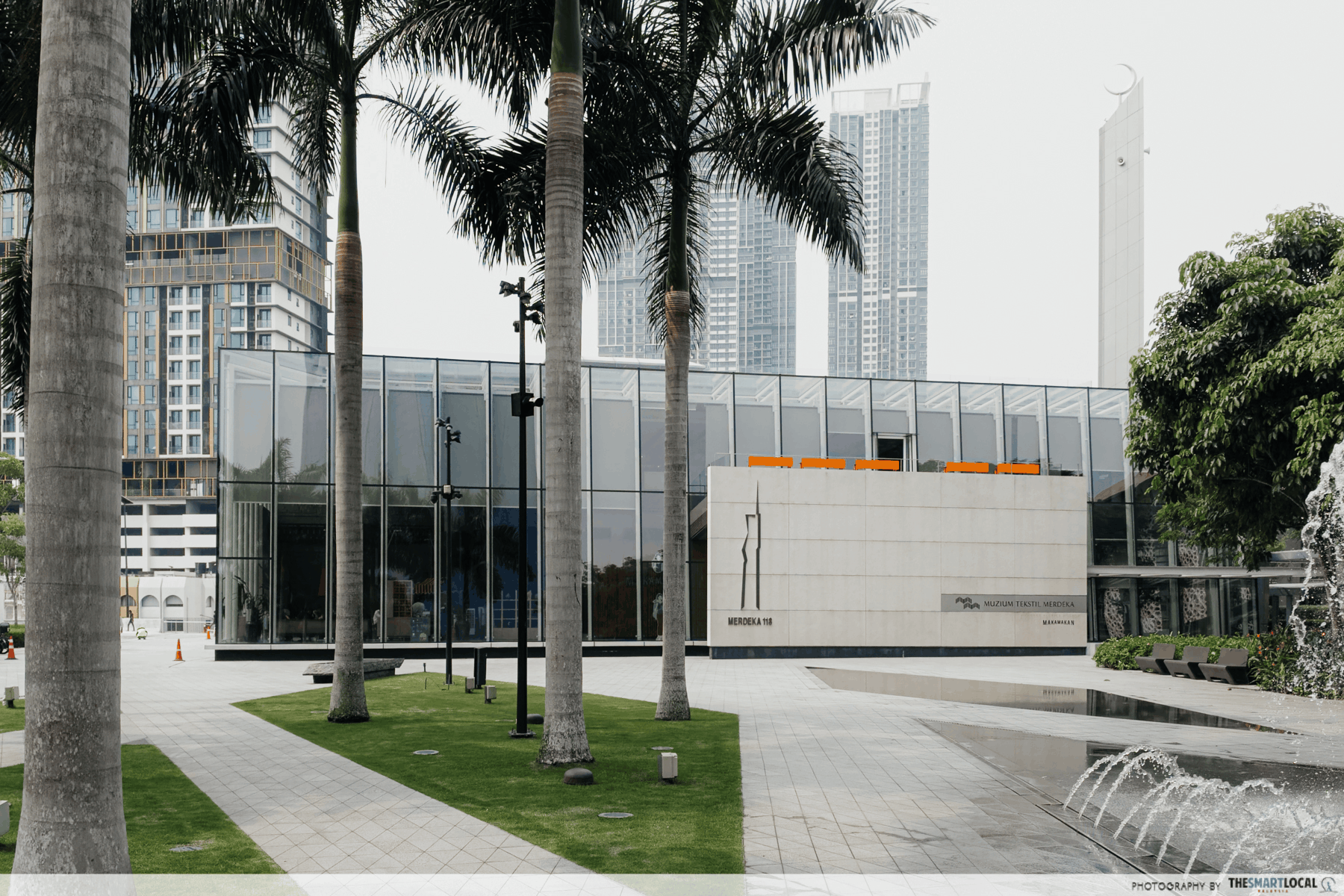
The Merdeka Textile Museum is located within the Merdeka 118 precinct, where the city’s modern skyline meets the historic neighbourhoods surrounding it. It sits next to Stadium Merdeka, and just a stone’s throw from Merdeka Maybank Tower and the upcoming 118 Mall.
Those coming by car can park at Merdeka Maybank Tower, while those opting for public transport should alight at Merdeka Station on the MRT Kajang Line and LRT Ampang Line. The museum is also accessible on the KL Monorail Line, via the Maharajalela Station.
From Merdeka Maybank Tower, exit through the main doors and head down the stairs across the road. You’ll be able to spot Stadium Merdeka to your left, and the Merdeka Textile Museum on your right.
Learn more about Malay textiles at Merdeka Textile Museum
Textiles can tell us far more than just what people once wore. Through Azah Aziz’s collection and research, the Merdeka Textile Museum offers a closer look at the customs, craftsmanship, and stories woven into Malay culture, while using technology to introduce them to a new generation.
 Sign Up with TSL Connect

Cover image adapted from: TheSmartLocal Malaysia